The Lost Stories of J.J. Abrams’ ‘Star Trek’ 2009: 4 Unmade Adventures Fans Never Saw
Four finished novels were set to expand the Star Trek 2009 universe—until they were suddenly axed

Key Takeaways
- Four 'Star Trek' 2009 tie-in novels were written, announced, then abruptly scrapped.
- The publisher said it paused new stories to protect J.J. Abrams’ evolving movie vision.
- The plots tackled Klingons, Sarek/Spock tension, refugees—and elder Spock’s secrets.
When Star Trek 2009 introduced J.J. Abrams’ reimagined version of the franchise, the expectation was that the story wouldn’t be confined to the screen. In fact, plans were already underway to expand that universe in the gap between the first film and its Khan-centric sequel, Star Trek Into Darkness, through a series of four original novels from Simon & Schuster. But something unexpected happened along the way.
After the books had not only been commissioned but largely written—and even announced in the publisher’s catalog—Simon & Schuster abruptly pulled back from the entire line. As the company explained at the time, “With last summer’s blockbuster Star Trek movie, J.J. Abrams created a new, vibrant, layered version of the Star Trek universe. After careful consideration, we decided to hold off on telling new stories while J.J. and his team continue to develop his vision.” It’s the kind of decision one might assume would come before four novels were completed, rather than after—but they nonetheless add to the tapestry of other unfilmed Star Trek adventures, including the Phase II television series of the 1970s, the proposed Planet of the Titans in 1976 and even the suggested first encounter between Kirk and Picard in an alternate version of 1994’s Generations.
Had the line moved forward, it would have begun with Alan Dean Foster’s Refugees, followed by Christopher L. Bennett’s Seek a Newer World, David Mack’s More Beautiful Than Death, and Greg Cox’s The Hazard of Concealing. At the time, each of the writers embraced the creative freedom offered by the altered timeline, seeing it as a rare opportunity to explore familiar characters without the constraints of established canon.
Alan Dean Foster: “It opens up a raft of possibilities in the sense that anything is fair game now, because nothing is canon. You can start all over again with the same characters and same general background and do anything you want. By the same token, just as the people who did the film realized, you don’t want to alienate the legion of fans who have grown up with Star Trek, so while you’ve got unlimited range for your storytelling, you have to keep in mind that you don’t want to do something so outrageous that it turns everybody off.”
Christopher L. Bennett: “The new timeline is an intriguing mix of the familiar and the new. On the one hand, it’s a chance to explore the formative years of the characters we know so well; to write about a younger Kirk, Spock, McCoy, etc. as they’re still getting to know each other and feeling out their relationships. But at the same time, there are fresh angles and twists that add spice to the experience and give me new things to discover. And while it can be limiting to be deprived of the ability to build on past Trek continuity, it’s also somewhat liberating not to be bound by such an enormous canon, to build a story purely on one movie and the fundamentals of the TOS characters and universe.”
David Mack: “The movie provides freedom. It’s a brand new universe. A parallel timeline. All bets are off now. The past of the Star Trek universe has changed, and so might its future. As an author of original Star Trek tie-in novels, I was able to write a book based on the new film without having to worry about 40 years of trivia and continuity. I had to respect only the details established in the new movie, and I was encouraged not to muddy the waters with references to other books. The result, I hope, is that More Beautiful Than Death will feel familiar and accessible to fans for whom the new movie was their entry point into the franchise.”
Greg Cox: “I’ve written over a dozen previous Trek novels and short stories, but I really tried to shake off any mental cobwebs and approach this book as a brand new thing. The most important effect of the new timeline, of course, is that the destinies of Kirk and Spock and the rest are no longer set in stone. We don’t know what the future holds for them anymore.”
Christopher L. Bennett: “It’s also a satisfying career opportunity to be able to get in on the ground floor of something new like this. To be one of the first authors working in this milieu—actually the first, since I was the first one hired to do an Abramverse novel before Pocket wisely decided that Alan Dean Foster’s name would sell more books than mine and would be a better choice to lead off with. I’m taking one of the first steps into the new frontier—how can a Trekkie not be excited about that?”
‘Episode guide’ to the lost voyages
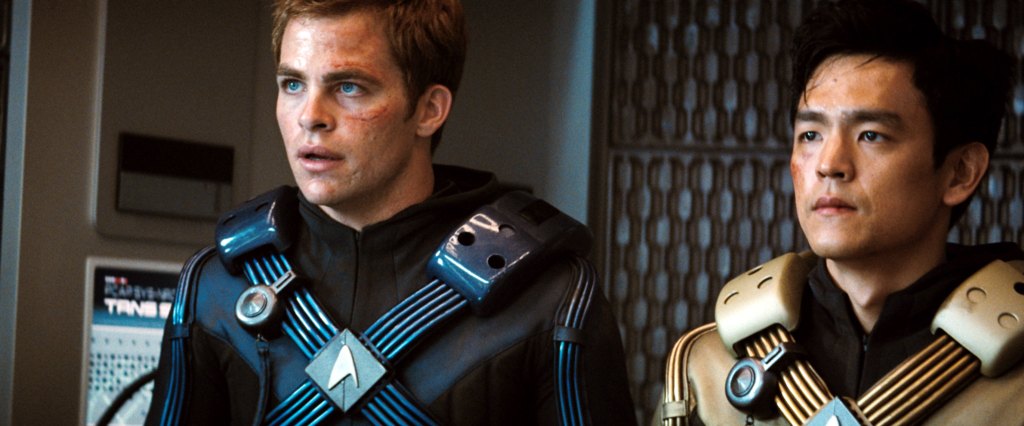
Book One: Refugees
Author: Alan Dean Foster
Summary: When the Enterprise responds to a distress signal, Kirk and his crew find themselves in the middle of an attack on a massive colony ship. The aggressors, known as the Dre’kalk, refuse all attempts at communication, forcing Kirk to intervene and drive them off. What they uncover in the aftermath is troubling. The vessel is carrying the Perenores—a race of furry, bisymmetrical beings—who are in dire condition. Starving, injured and running dangerously low on both fuel and supplies, they’ve clearly been wandering far from home with nowhere left to turn. Faced with the humanitarian crisis, Kirk makes the decision to help relocate them, offering the refugees a chance at survival within Federation space. But the situation takes an unexpected turn two months later. A new alien power, the Barran, begins threatening the Federation with war—specifically over its decision to shelter the Perenores, whom they describe as a dangerous menace. The accusation doesn’t add up to Kirk or Spock. Everything they’ve seen suggests the Perenores are peaceful and desperate, not hostile. Which raises the question: what aren’t they being told?
Alan Dean Foster: “I’m big with aliens, and I don’t think they are well served in most filmed science fiction. They don’t act alien. The kind of aliens I’m talking about are truly alien. Obviously, they have to be comprehensible to us or you can’t respond. With Refugees, I wanted to introduce some real aliens, which is something Star Trek fans wanted. I’m sure Roddenberry would have done it on the original series if they had the technology and the money to visualize it. Kirk and the crew, of course, wouldn’t be startled by the appearance of the aliens, although the cultures are different. And the motivations are different. Remember, even if it’s a reimgination in this timeline, it’s still the Federation and they still know about other aliens. There’s a lot more to the makeup of the Federation than we get to see in the film. I can’t really say anything too specific about the plot, only that things are not what they seem. Things are never what they seem.”
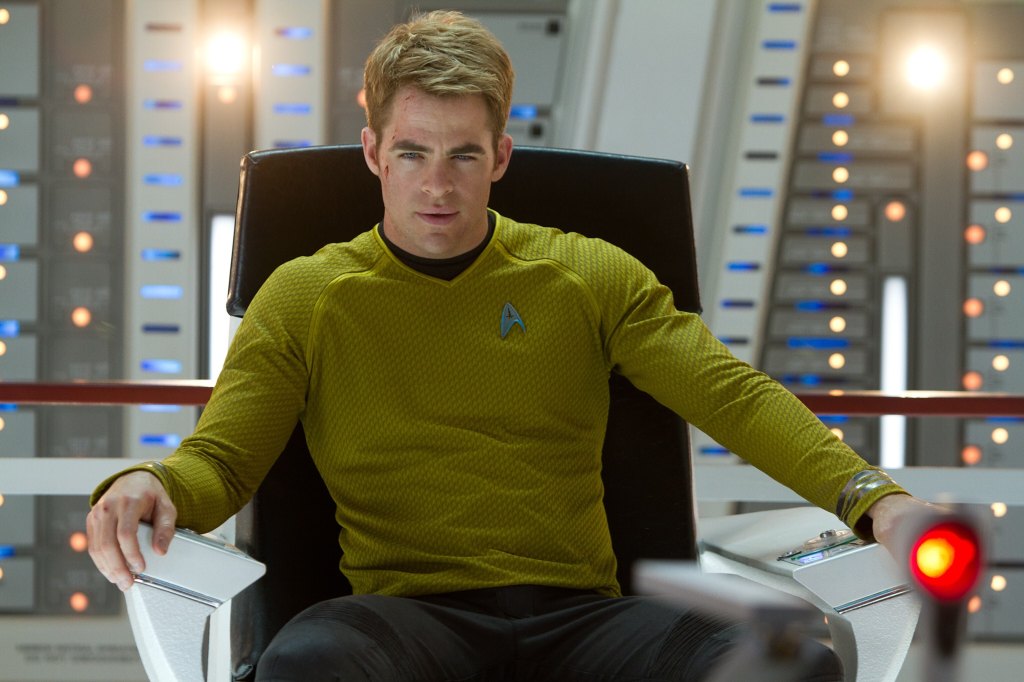
Book Two: Seek a Newer World
Author: Christopher L. Bennett
Summary: Still reeling from Nero’s escape, the Klingons are determined to reclaim their honor—and they’ve set their sights on the one ship they hold responsible: the Enterprise. What begins as a routine mission quickly spirals into a fight for survival. The Klingons strike hard and fast, overwhelming Kirk and his relatively inexperienced crew with superior numbers and tactics that leave the Enterprise outmatched at nearly every turn. It’s only through a narrow escape that they manage to survive the encounter at all. But the ordeal leads them to something even more extraordinary. Within the radiation belt of a massive planet, the crew discovers an entire civilization—multiple worlds existing within worlds, hidden away from the rest of the galaxy. The sheer scale of it is staggering, suggesting a level of technological power far beyond anything the Federation has encountered. For Kirk, the mystery becomes impossible to ignore. Who would build something like this—and more importantly, what are they hiding from? And as he pushes to uncover the truth, it becomes clear that whatever secrets lie within this concealed civilization may be just as dangerous as the Klingons they barely escaped.
Christopher L. Bennett: “We still know next to nothing about the Klingons in the new timeline, so I pretty much had a blank slate. However, it’s certainly likely that Nero’s destruction of an entire Klingon fleet would make them angry and eager to strike out at someone—and the Federation, which has just lost one of its most important worlds, has got to be looking pretty vulnerable to them right now. Initially, I was thinking of doing a story that arose more directly from the movie’s lingering threads. But I wasn’t sure that was standalone enough to fit the mandate, and the idea I was contemplating didn’t lend itself well to action and spectacle. I decided instead to tell a more self-contained story, a tale focusing on something new and original and spectacular, but something that would resonate thematically and emotionally with where the characters are in the wake of the film. So it’s still a story about the aftermath of the movie, but in an indirect way. In the wake of Vulcan’s destruction, a lot of people in the Federation would probably want to make a priority of defense and caution. But how does that reconcile with Starfleet’s ideals of openness and exploration? That tension informs the novel on multiple levels.
“I also decided to focus the story on a phenomenon that would be unique to the new continuity, something that implicitly was never discovered in the original timeline. That way, it would be a story that could only be told in the Abramsverse. Character-wise, I felt there was a bit more to be said about the characters’ journeys. The film implied that by the end, the characters had all achieved their familiar roles and personalities; that they’d grown into the cast we knew from TOS. But I felt there were one or two more steps needed for some of them to credibly reach that stage. So I was able to tell a story that let the characters go through some real growth, but which ends up with them in the same places I expect them to be in the next movie.”
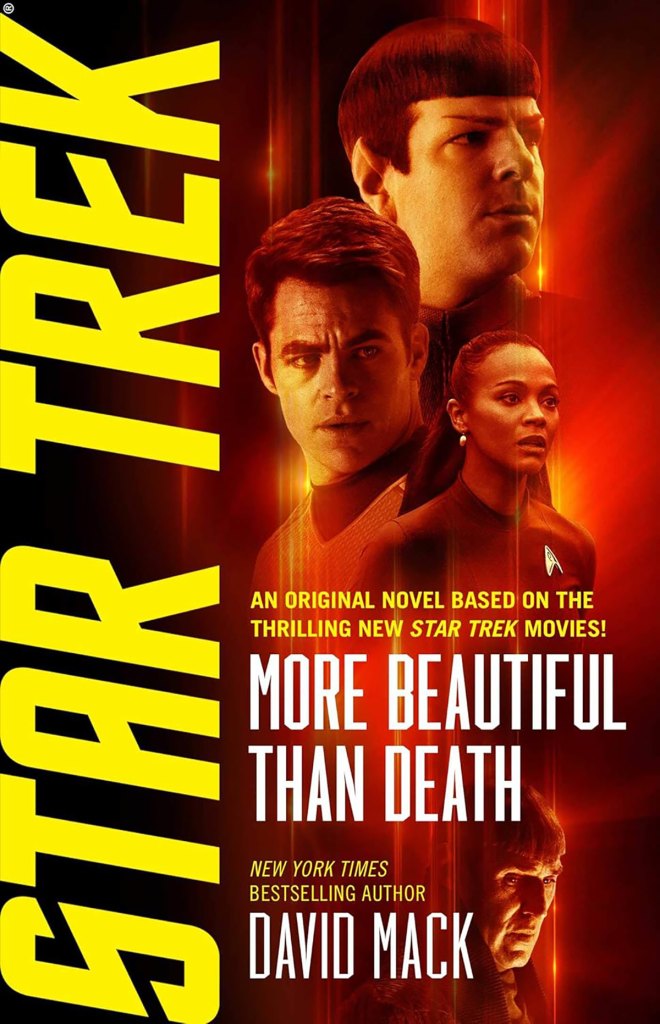
Book Three: More Beautiful Than Death
Author: David Mack
Summary: Captain Kirk and the Enterprise set course for Akiron, a strategically important world rich in dilithium but fiercely protective of its independence. Their mission is diplomatic as much as exploratory, with Ambassador Sarek aboard in hopes of opening trade negotiations between the planet and the Federation. Kirk understands the importance of the assignment and assures Sarek that he—and the entire crew—will offer their full support in securing a peaceful agreement. For Spock, the mission carries a more personal dimension. Reunited with his father and the Vulcan delegation, he finds a measure of comfort in seeing them move forward in the aftermath of their world’s destruction. But Sarek’s presence on the Enterprise is not as straightforward as it seems. While the official objective is diplomacy, the ambassador is quietly pursuing a second agenda—one that could have far-reaching consequences not only for the mission to Akiron, but for the crew itself.
David Mack: “In the original Star Trek timeline, Sarek and Spock had not spoken since Spock rejected the offer of admission to the Vulcan Science Academy, and their relationship was ice-cold until at least 2269–more than a decade after the events of the new Star Trek film. All that animosity seems to have gone by the wayside the moment Spock’s mother, Amanda, died during the implosion of Vulcan. My personal feeling is that, in the aftermath of such an epic tragedy, neither Spock nor Sarek would see any logical purpose to harboring a grudge over Spock’s choice of career–especially since that choice saved Sarek’s life. However, putting aside an old grudge does not necessarily mean that father and son will suddenly be of like mind. There are still many issues on which they are bound to disagree, and one such conflict underpins a key subplot in More Beautiful Than Death.” Note: This title was published in 2020, over a decade after it was originally intended for.

Book Four: “The Hazard of Concealing”
Author: Greg Cox
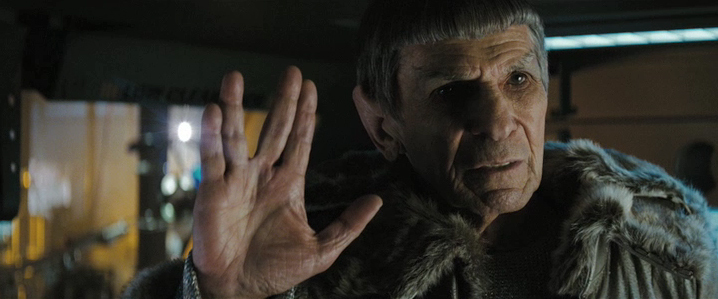
Official Summary: In the aftermath of the events seen in the recent film, one major question remains unresolved: the fate—and future—of the elder Spock, displaced from the 24th century into this newly altered timeline. With his knowledge of advanced technology and events yet to come, Spock represents something unprecedented—a living repository of the Federation’s future. To Starfleet Command, that makes him an invaluable strategic asset, and they are eager to bring him back into the fold to share what he knows. Spock, however, sees the situation very differently. Aware of the dangers inherent in tampering with an already fractured timeline, he resists any effort to interfere, believing that the future must be allowed to unfold on its own terms. But that restraint may come at a cost. As forces hostile to the Federation begin to move, recognizing the potential power Spock represents, he finds himself at the center of a dangerous struggle—one that could determine whether his knowledge is safeguarded…or weaponized, with consequences that could ripple across the galaxy.
Greg Cox: “Ambassador Spock’s advanced knowledge of future events and technology is the warp engine that drives the story. The ways in which that knowledge can be exploited (or abused) is a source of great concern to Spock, Starfleet and various hostile powers. Spock himself is somewhat conflicted as to just how much ‘cheating’ he should indulge in. The basic idea and plot came from my editor, Margaret Clark, who wanted a book that focused on both Ambassador Spock and Scotty. I took her synopsis and fleshed it out into a full-length book. In doing so, my primary goal was to capture the infectious sense of fun that the new movie had restored to the series, while still dealing with the serious issues raised by the premise. Most of all, I wanted this to be a book that felt like the new movie, and that would appeal to both long-time fans and to readers who might have never picked up a Star Trek novel before.”
In the end, Star Trek has always been about possibility—about looking forward, exploring the unknown, and imagining roads not taken. In a sense, these four unpublished novels represent exactly that: stories born out of a moment when the franchise had been reset, its past untethered and its future wide open. The irony, of course, is that while the films moved ahead and defined that future on their own terms, these particular voyages were left behind, existing only in outlines, drafts and the memories of the writers who briefly stood at the edge of that new frontier.
Conversation
All comments are subject to our Community Guidelines. Woman's World does not endorse the opinions and views shared by our readers in our comment sections. Our comments section is a place where readers can engage in healthy, productive, lively, and respectful discussions. Offensive language, hate speech, personal attacks, and/or defamatory statements are not permitted. Advertising or spam is also prohibited.