‘Battle of the Network Stars’ Secrets Revealed, 50 Years Later: When Tom Selleck to William Shatner Were Ready To Win TV’s Wildest Competition
Speedos, heated rivalries and real passion: Why celebs went all-in on 'Battle of the Network Stars!'

Key Takeaways
- Former USC volleyball athlete Tom Selleck jumped at the chance to join the show four times.
- Producers were shocked to discover souvenir posters of Tom Selleck in a Speedo being sold.
- Producer Bill Garnet reveals the competitive secrets that made the 1976 show a phenomenon.
Before there was a ‘Battle’
According to Garnet, the roots of Battle of the Network Stars actually stretched back years before its 1976 debut.
BILL GARNET (producer, Battle of the Network Stars): “There was a gentleman by the name of Dick Button who won the gold medal in men’s figure skating twice in the Olympics. And when he won the second one, he was awarded something called the Hickok Belt, which at the time—it doesn’t exist anymore—represented who was considered to be the best amateur athlete in the United States.”
“And Dick commented that not only didn’t he think he was the best amateur athlete in the United States, he didn’t even think he was the best amateur athlete amongst figure skaters. So out of that, he grew this idea, which he finally nicknamed World’s Most Versatile Athlete. And his idea was to get a bunch of athletes together who were famous in their sport and have them compete in sports other than what they were famous for.”
Button took the idea to the three networks — ABC, NBC and CBS — and initially found no takers.
BILL GARNET: “The gentleman that he pitched it to at CBS was a guy named Barry Frank, who later became the executive vice president of the International Management Group. It had a division called Trans World International, which was the television production arm of it. Barry remembered World’s Most Versatile Athlete, changed it to The Superstars, went and pitched Roone Arledge at ABC, and Roone said, ‘Fine, you can get it on a Sunday afternoon if you can get it sponsored.’ Which Barry did. It did well. So the next year they did, I think, four of them. And the next year they did seven of them. And it continued to grow and spawned Women’s Superstars, World Superstars and then we did something called Celebrity Superstars, which had people like Oleg Cassini and Robert Duvall. And out of that grew the idea of doing Battle of the Network Stars.”
Getting ABC, CBS and NBC to play together
Bringing stars from the three competing networks together was something virtually unheard of at the time. “It wasn’t pretty unprecedented,” he clarifies, “it was unprecedented.”
Yet the networks quickly recognized that putting their stars on ABC could actually benefit them.
BILL GARNET: “The networks were looking at the show as great publicity for their shows, so they didn’t mind the exposure. Not sure you could get away with it these days, but those days, networks had no problem. And it was always on ABC, so ABC, of course, had no problem, but NBC and CBS were more than happy because they figured it was great exposure for their shows. And we always were the number one show, so whether you were on a CBS show or an NBC show, the exposure for your show was great.”
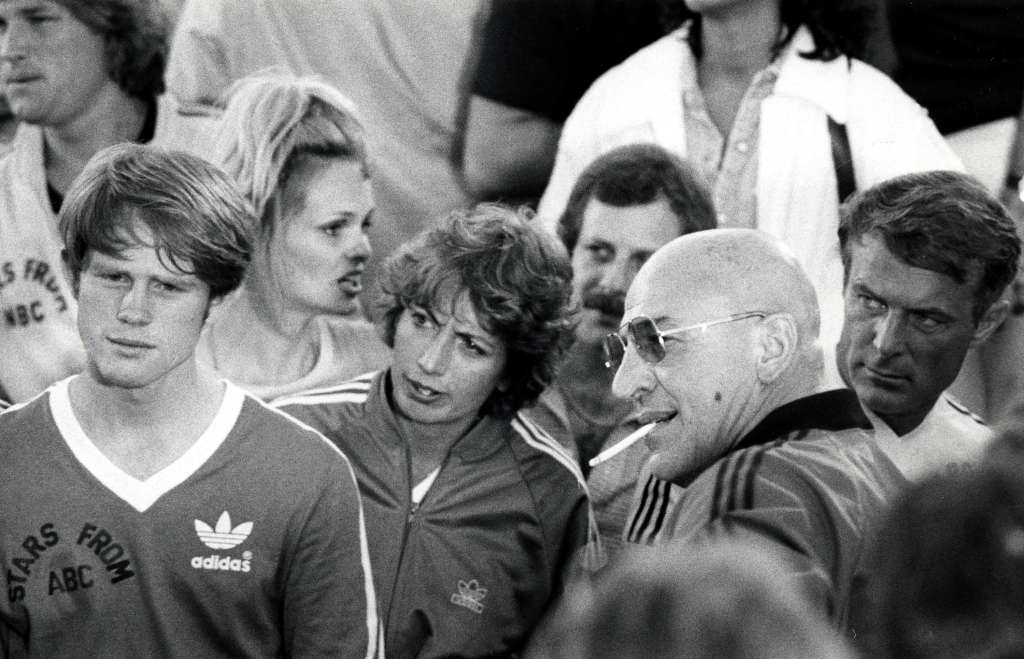
The first Battle included Ron Howard, Penny Marshall, Robert Conrad and Gabe Kaplan, among many others. But for Garnet, one incident in particular demonstrated why the show connected with viewers.
BILL GARNET: “The thing that I think made the show take off was the running relay in the first show. What happened was one of the NBC runners was judged as passing the baton outside the passing zone. NBC won the race, but it was decided that they had to be penalized because they passed it out of the zone. As a result, they were awarded a two-second penalty, which put them in second place and put ABC in first place.
“Bob Conrad was not happy about this. Bob was a very competitive guy, so he started going nuts and thought it was unfair and so on and so forth. And Telly Savalas got involved. But at the end of the day, Conrad said to Gabe Kaplan [Welcome Back Kotter], ‘Why don’t we have a runoff?’ And Gabe said, ‘Just you and me.’ What Gabe knew, which Bob didn’t, was Gabe ran track in high school, so it was Bob Conrad against Gabe Kaplan and Gabe Kaplan beat him. But I think that moment, that drama and that sort of realism made people say, ‘Oh, this is actually real. This isn’t just a bunch of actors making believe they’re doing stuff.’ They were really competitive.”
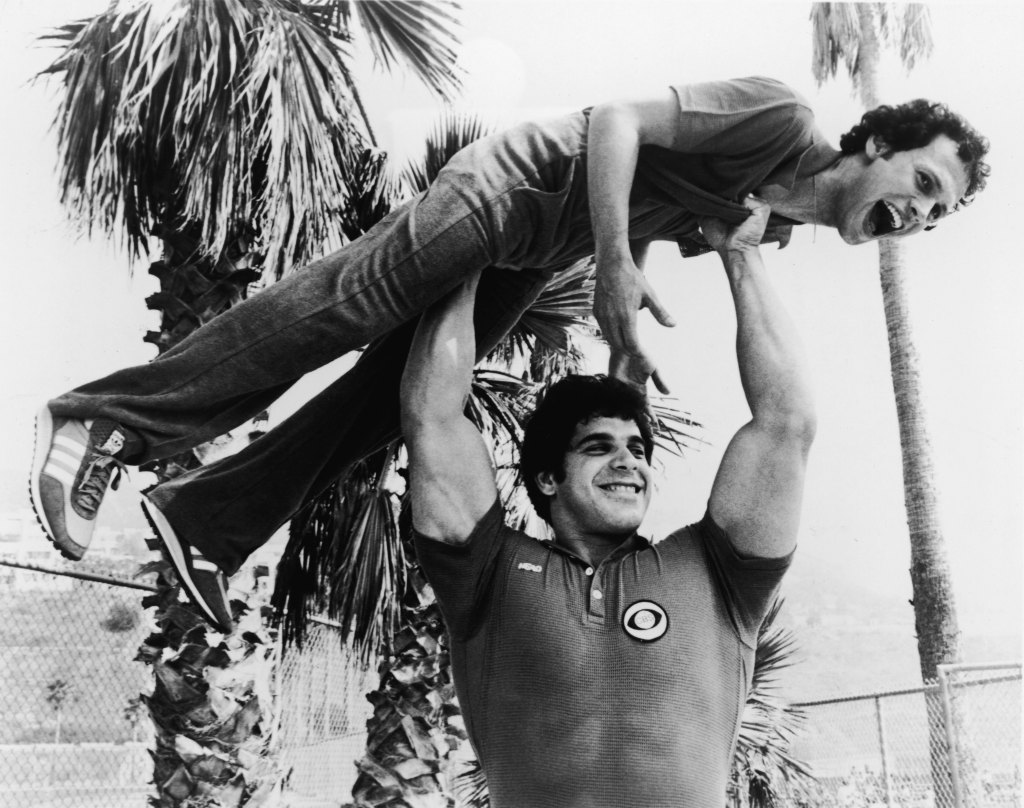
LOU FERRIGNO (actor, The Incredible Hulk): “I remember when I did Battle of the Network Stars, I had a chance to see all the other celebrities from the TV shows being themselves. Because when you’re filming a TV series or a film, you’re playing a character. It was just like a group of us all having fun, especially when it came to the competition. But when it came to the competition, they’d fire the gun and everyone changes. Everybody wants to win. Nobody wants to lose. I remember I had a great time on the show because you had the different networks—CBS, NBC, ABC. And I remember people like Robert Conrad, Erin Gray, these different people, being with them, seeing them. It was just so delicious.”
Celebrities who wanted to be athletes
BILL GARNET: “What we found out over the course of time is that athletes wanted to be celebrities and celebrities wanted to be athletes, so this gave them their chance to. It was one weekend at Pepperdine, which is in Malibu and is beautiful. And we demoed everybody out. They, at the time, got paid rather well for it, but the bottom line was they had fun and we knew it was competitive, but it was outside of their acting. So they got to do something that was fun in sports and something that they could sort of sink their teeth into.”
In Robert Conrad’s case, his Battle persona even had an unexpected impact beyond the show.
BILL GARNET: “There was a time where, I don’t remember which one of the shows it was, but Bob Conrad was out of work. He had done The Wild Wild West and he had done Baa Baa Black Sheep and that got canceled and he had nothing lined up. We were sitting there in the bleachers talking and I said, ‘Why don’t you just be a hard-ass? Maybe something will come of it.’ What came out of that was his successful Eveready Battery commercials. That sort of grew out of this character that he played on Battle of the Network Stars.”
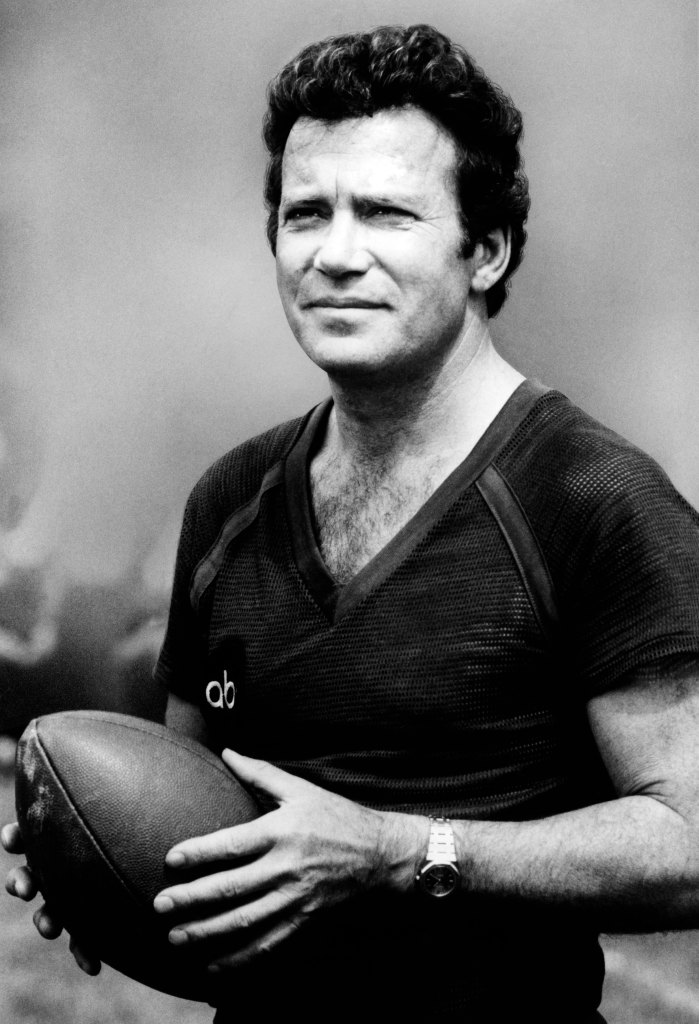
Few celebrities took the competition more seriously than Star Trek icon William Shatner.
BILL GARNET: “Well, he was very competitive. In fact, as I remember, when he was the captain of his team, I think it was two weeks, it might’ve even been three weeks before we were going to shoot the show. He would gather his team together and they would practice and they would determine who was going to be in the running, who was going to be in the swimming, who was going to be in the kayak. And he had it all down the morning they showed up. He knew who was going to be in every event and what heat they were going to be in or what leg. He was a captain of his team.”
“He was still in the era of taking himself seriously. Although I will say that backstage during Battle of the Network Stars, it wasn’t crazy serious. But once the cameras rolled, he was going to be the captain of his team and he was going to win come hell or high water. He wasn’t going to mess around. And so he was Captain Kirk of his team.”
Mark Harmon, Erin Gray and Tom Selleck
Some competitors arrived with considerably more athletic experience than viewers might have expected.
BILL GARNET: “I remember Mark Harmon, who was quarterback at UCLA and big-time quarterback, and one of the events was football. I remember him coming over and saying, ‘Wouldn’t be fair if I was quarterback,’ so he ended up being one of the receivers. Gabe Kaplan was very competitive. Conrad was very competitive. So were Erin Gray and Cathy Lee Crosby, who was a very good athlete.”
ERIN GRAY (actor, Buck Rogers in the 25th Century): “I actually learned just how competitive I am. I’m pretty fierce.”
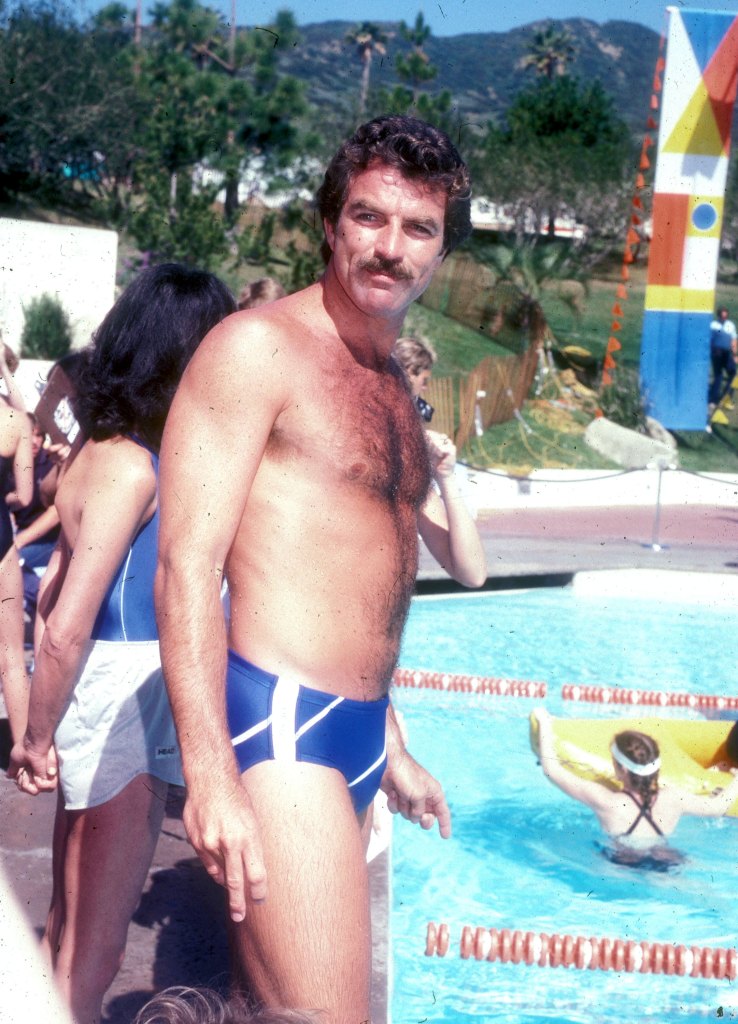
BILL GARNET: “They wanted Tom Selleck, who at the time was a big star doing Magnum, P.I. and the talent booker didn’t think he would do it. But a friend of mine was working on Magnum, P.I., so I figured I’d call him and see if he could put in a good word. I said to him, ‘I’m trying to reach Selleck to see if he’ll do Battle.’ And he said, ‘Hold on.’ Handed the phone to Tom Selleck. I said to him, ‘You don’t know me. I’m producing Battle of the Network Stars.’ ‘Oh my God, don’t you understand? I went to USC on a volleyball scholarship. I’d love to do that show.’ And he ended up doing it four times.”
Selleck’s first appearance also resulted in one of Garnet’s favorite memories.
BILL GARNET: “If you remember, they all were supplied with Speedos, rather skimpy bathing suits. About three weeks after the first time Selleck did it, he called me up in the office and he said, ‘I hope you’re making money on this.’ I said, ‘What are you talking about?’ He said, ‘You don’t know?’ I said, ‘Help me out here. I don’t know what you’re talking about.’ He said, ‘Get in your car and drive over to Westwood and go to this address.’ I drive over and there’s a poster shop. In the front window is a picture of Tom Selleck on the starting blocks of the swimming in his Speedo with me standing next to him. So I called him back and said, ‘No, I’m not making any money off it.'”
The women became a force
The series also reflected the attitudes toward women and sports in the late 1970s and early ’80s—and Garnet watched those attitudes begin to evolve.
BILL GARNET: “I think it was that time period really where when it came to sports, men tended to take command. And especially some of them— Robert Conrad, Telly Savalas, Gabe Kaplan, Shatner. At that time in the late ’70s, early ’80s, men looked at sports as a men’s thing. We looked at it as when we were booking it, you needed men and women. But the women tended to play second fiddle up until a certain point. And then when they started to realize that some of these women were incredibly good athletes. There were a number of the women who, when you put them side by side with the guys—I mean, the guys were probably a little bit older, not in as good a shape. And so little by little, it grew that the women actually played a more important role as time went on.”
ERIN GRAY: “I remember they wouldn’t let any of the women become captains, and I was really ticked. There was a gentleman who was the captain of one of the Battle of the Network Stars that I did, and he didn’t know the back end or the front end of a boat. I was, like, ‘We’re going to win. Okay?’ So I just took it upon myself to knock on everybody’s door. I said, ‘You lose points if you don’t know the rules. Let’s go over the rules right now.’ And I just took charge. Mama was going to win.”
BILL GARNET: “There was no rule about men and women on the teams. I mean, in terms of whether it be the swimming or the kayak or the running, it was the captains who decided who was going to go on what leg. And it could be men against women, women against women, men against men. It didn’t matter. That was up to the captains.”
ERIN GRAY: “I remember the first time we were doing flag football with Robert Conrad and I’m, like, ‘Ugh!’ And he’s laughing at me, but I didn’t care. What was I thinking? Robert Conrad’s going to knock me over with one bump. But we became good friends after that. I think he liked my spunk.”
Lynda Carter and the Standards and Practices Department
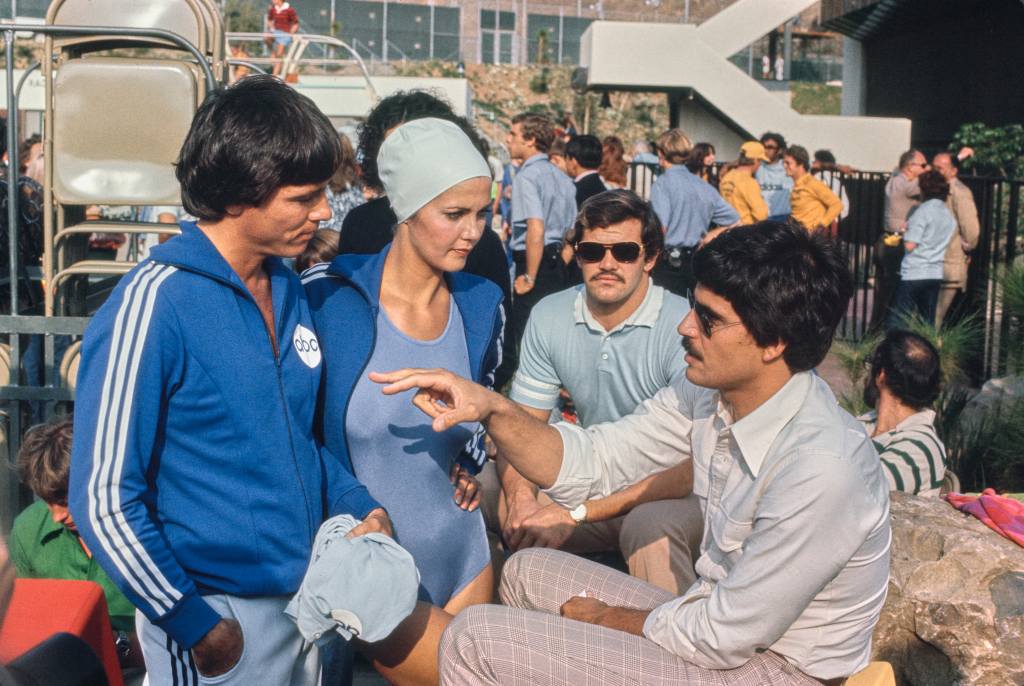
Having dozens of television stars running around in Speedos occasionally presented challenges that had nothing to do with athletics. Garnet remembers Lynda Carter preparing for the swimming competition when someone from ABC’s Standards and Practices department approached him.
BILL GARNET: “Lynda was at the pool getting ready for the swimming event. The Speedos were very tight and therefore very revealing, and the Standards and Practices person from ABC came over to me and said, ‘No.’ And handed me a roll of gaffer’s tape. I had to walk over to Lynda. She had been here before and went to her dressing room and gaffered up where she had to gaffer up.”
ERIN GRAY: “On Silver Spoons, I was constantly being told that my nipples were showing and that I should wear a bra. I hate wearing a bra, so I would just put an extra sweater on or whatever, but I was constantly getting these notes from the network. So what did they do on Battle of the Network Stars? They gave me a bathing suit that once it got wet was completely 100% see-through. It wasn’t just a little nipple peeking there. You could see it all. I’m, like, ‘Really, guys? Did anybody think about this?'”
It wasn’t the only Standards and Practices note Garnet remembers.
BILL GARNET: “There were notes about shots of nipples or wet asses, but my favorite one of all time was Arte Johnson was on the show. He was doing the dunk tank, got dunked and yelled, ‘Oh, sh**.’ So I got a note from the Standards and Practices person, ‘Please edit out the ‘Oh, sh**.’ Of course, I wrote back a note that said, ‘No sh**.'”
Robin Williams goes in his own direction
BILL GARNET: “Billy Crystal did it a number of times and actually co-hosted with Howard Cosell, which was great fun because Billy did an imitation of Howard. So it was Howard and Billy doing Howard. David Letterman did it once. Robin Williams did it once. The level of celebrities that did it when you look back was incredible.”
Williams particularly sticks in Garnet’s memory.
“Fortunately, I knew Robin from the days when he was at the Improv. And Robin, I mean, arguably is the most genius stand-up comedian of all time, at least in my mind.But when we were doing it, he was very good. He was very sort of quiet until we got to the final event, which was the tug-of-war. When we did the tug-of-war, we always got this big meat scale with the big round things and people would go and stand on it and then we’d video them getting their weight.
“Well, Robin got on it and just went into this place where he started talking to the scale as though it was his mother for five minutes, 10 minutes. And I’ve got other people in the production saying, ‘What should we do?’ I said, ‘Let him go. Robin will come back when he feels like coming back.’ And he snaps out of it and he was fine. That was Robin. He would just go to places nobody else went.”
Howard Cosell treated it like a real sport
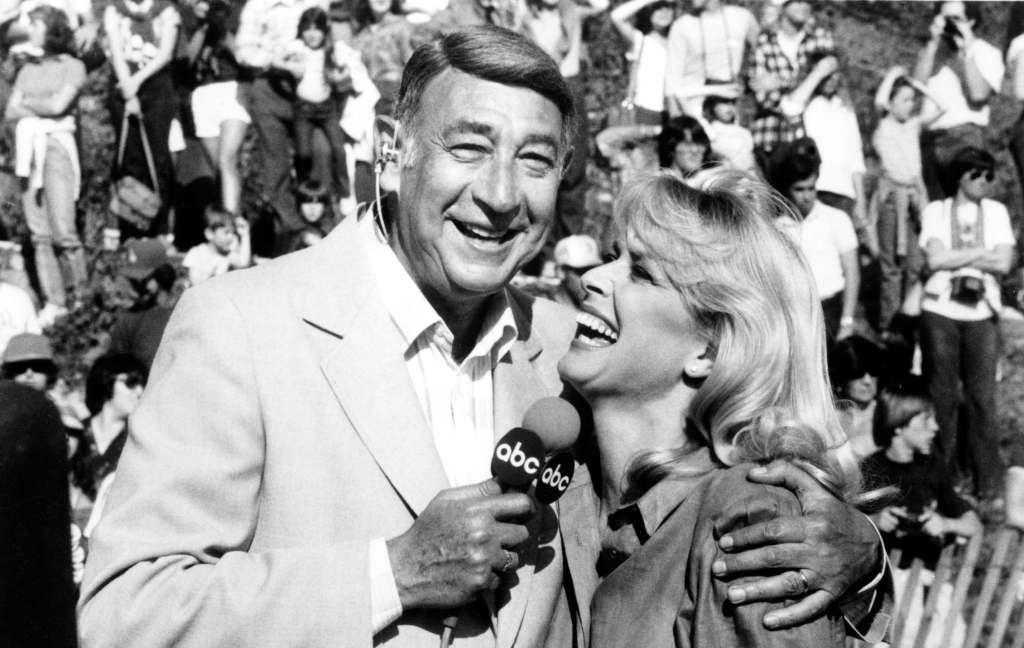
Overseeing much of the madness was sportscaster Howard Cosell, whose presence helped give the competition an odd kind of legitimacy.
BILL GARNET: “Howard was brilliant. Howard could talk to you about anything and have an opinion about everything, but he loved what he did. He loved sports, he loved being around athletes, or in this case, performers. He could do play-by-play of anything at any given moment. I mean, he was just brilliant. Howard used to show up every Saturday and Sunday morning at 6:30. He wanted to be the first one there and watch everyone arrive.
“And he’d come to me, ‘Billy, I’m the biggest star out there. They all want to do this show because of me.’ For the most part, he was right. He was a huge star. I mean, there were a couple of years where he was voted the most loved and most hated sportscaster in the same year. But he was brilliant. Brilliant. Howard always looked at doing Battle of the Network Stars as, ‘This is true sport. They’re not doing it for the money. They’re doing it for the love of athletics.'”
Why it worked
Garnet believes one of the reasons Battle of the Network Stars would be difficult to recreate today is the fragmentation of television itself.

BILL GARNET: “There were three networks then, ABC, NBC, CBS. Now there’s broadcast, there’s cable, there’s pay-per-view, there’s streaming. It would be hard to break it down into three or four teams. Also back in the day, pretty much everybody knew everybody who was on a show on ABC, NBC, CBS. Now, I’m not even sure that other actors know everybody who’s on every show. There are a lot of big stars who are coming out of YouTube videos and TikTok and I couldn’t tell you 90% of them. So, you could probably do the show today, but the audience would be so disjointed because someone might know this person from TikTok, but wouldn’t know the person from broadcast television.”
Fifty years later, Garnet doesn’t pretend Battle of the Network Stars was intended to change television or the world. In fact, that was precisely the point.
BILL GARNET: “Battle of the Network Stars wasn’t just a sports show. It was celebrities and it was a fantasy. People would come up to me when they were doing the show and say, ‘How do you justify doing something so meaningless?’ And I would say to them, ‘Look, if I can provide mindless entertainment where people can sit in front of their television for two hours every six months and smile at their television, and five minutes after it’s over, they don’t even remember what they watched, that’s a vacation. That’s providing a great service.’ Why does everything have to be so damn serious?”
Conversation
All comments are subject to our Community Guidelines. Woman's World does not endorse the opinions and views shared by our readers in our comment sections. Our comments section is a place where readers can engage in healthy, productive, lively, and respectful discussions. Offensive language, hate speech, personal attacks, and/or defamatory statements are not permitted. Advertising or spam is also prohibited.